Dave Wilson and PWK
/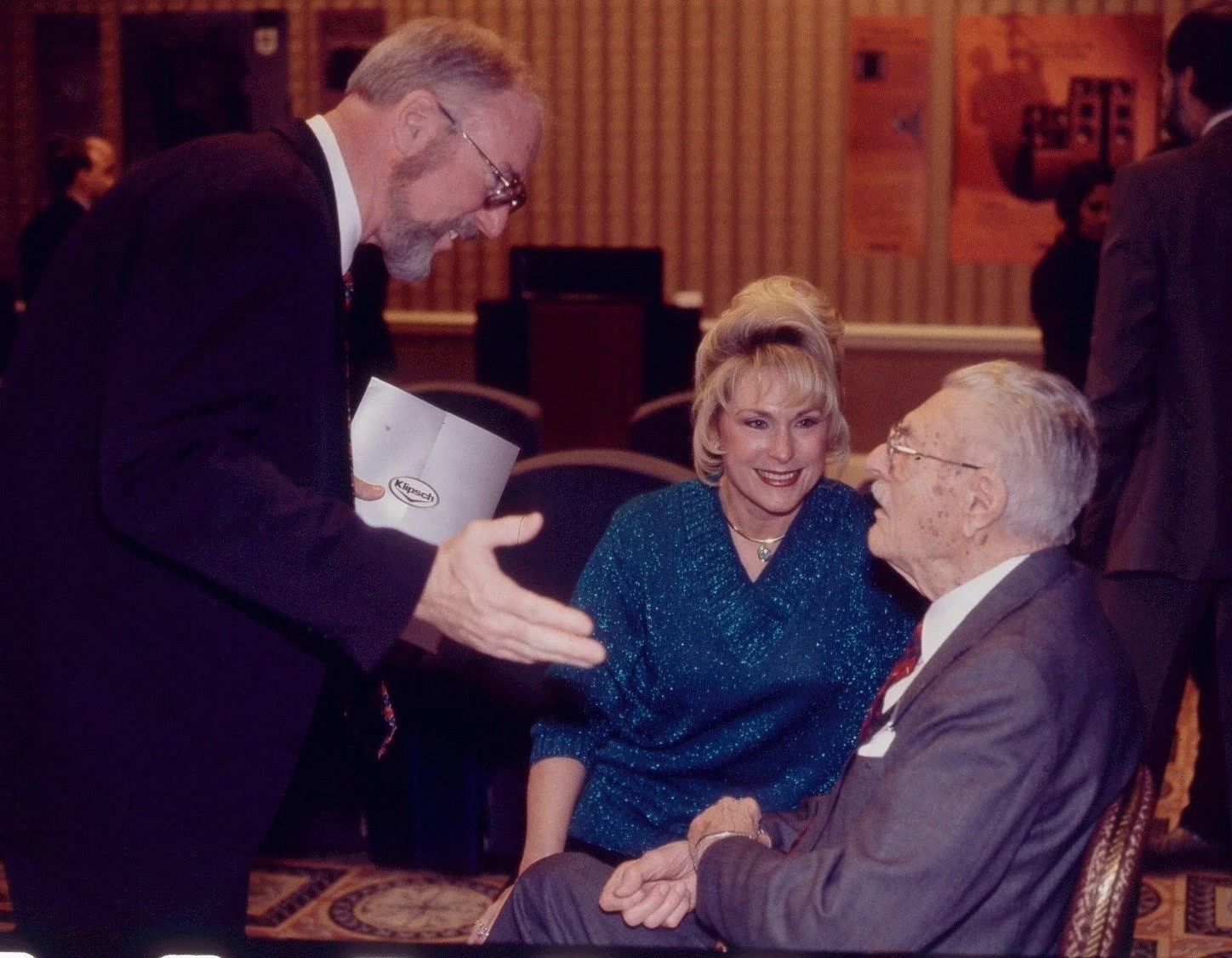
Dave Wilson of Wilson Audio and his wife Sheryl Lee congratulating PWK on the 50th anniversary of the Klipschorn. The first Klipsch Jubilee is in the background.
Read MoreDave Wilson of Wilson Audio and his wife Sheryl Lee congratulating PWK on the 50th anniversary of the Klipschorn. The first Klipsch Jubilee is in the background.
Read MoreTHE LEGENDARY KLIPSCHORN® - A fully horn-loaded loudspeaker of superior design and exquisite craftsmanship by Jim Hunter and Matt Sommers
Chapter 16 | EXPANSION AND INFRINGEMENT
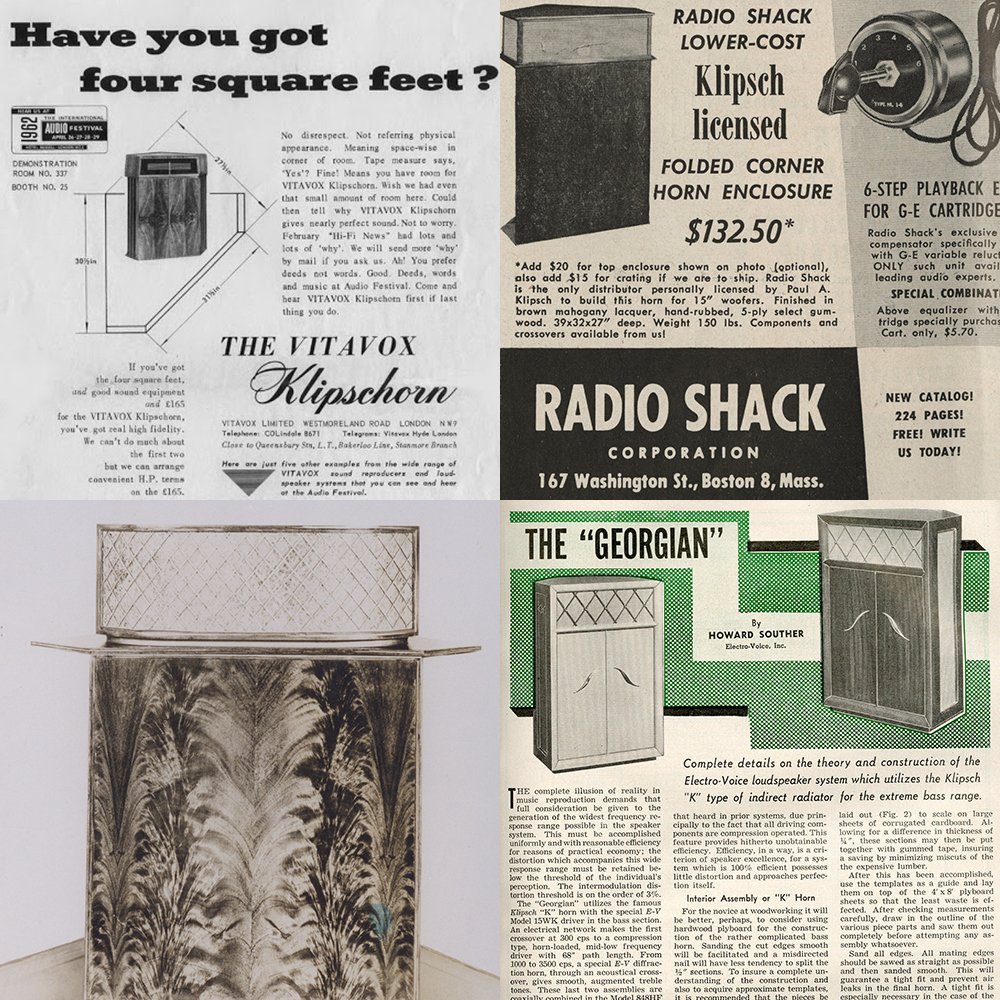
Now patent protected, PWK leveraged his products’ performance and popularity to create new revenue streams for his company. The first legitimate Klipschorn licensee was England’s Vitavox, who marketed their own version. As early as 1950 Radio Shack was also licensed for a less expensive model. Dominion of Canada was licensed, as was Electro-Voice, with models such as the Aristocrat, the Patrician, and the Georgian.
However, there were companies who tried to profit from Klipsch-protected designs without an agreement to do so. PWK eventually filed patent infringement proceedings against Brociner – along with Jensen, Speaker Lab, Permoflux, Angle Genesee, High Fidelity House, and Terminal Radio Corporation – for producing unlicensed knock offs of the Klipschorn under different names.
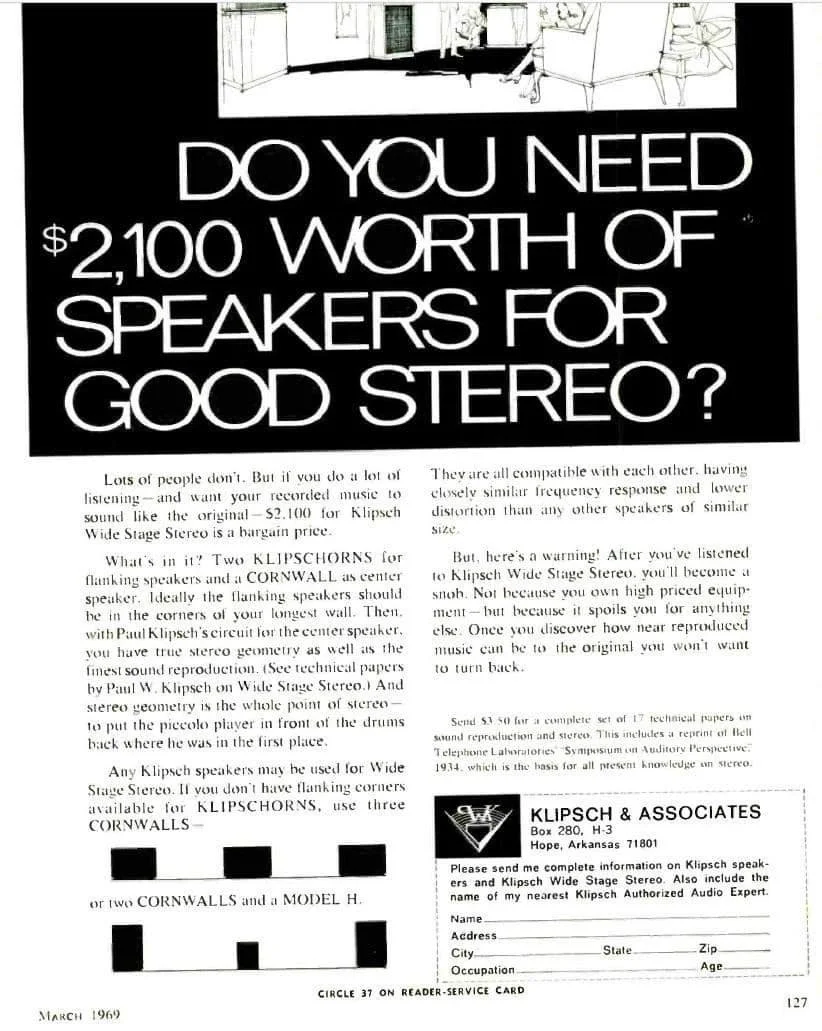
This ad ran in 1969. $2100 in 1969 is worth $18,041 today. This same setup retails for $19,797 today. Historically speaking Heritage has followed inflation pretty well.
Read MoreTHE LEGENDARY KLIPSCHORN® - A fully horn-loaded loudspeaker of superior design and exquisite craftsmanship by Jim Hunter and Matt Sommers. An excerpt from the book.
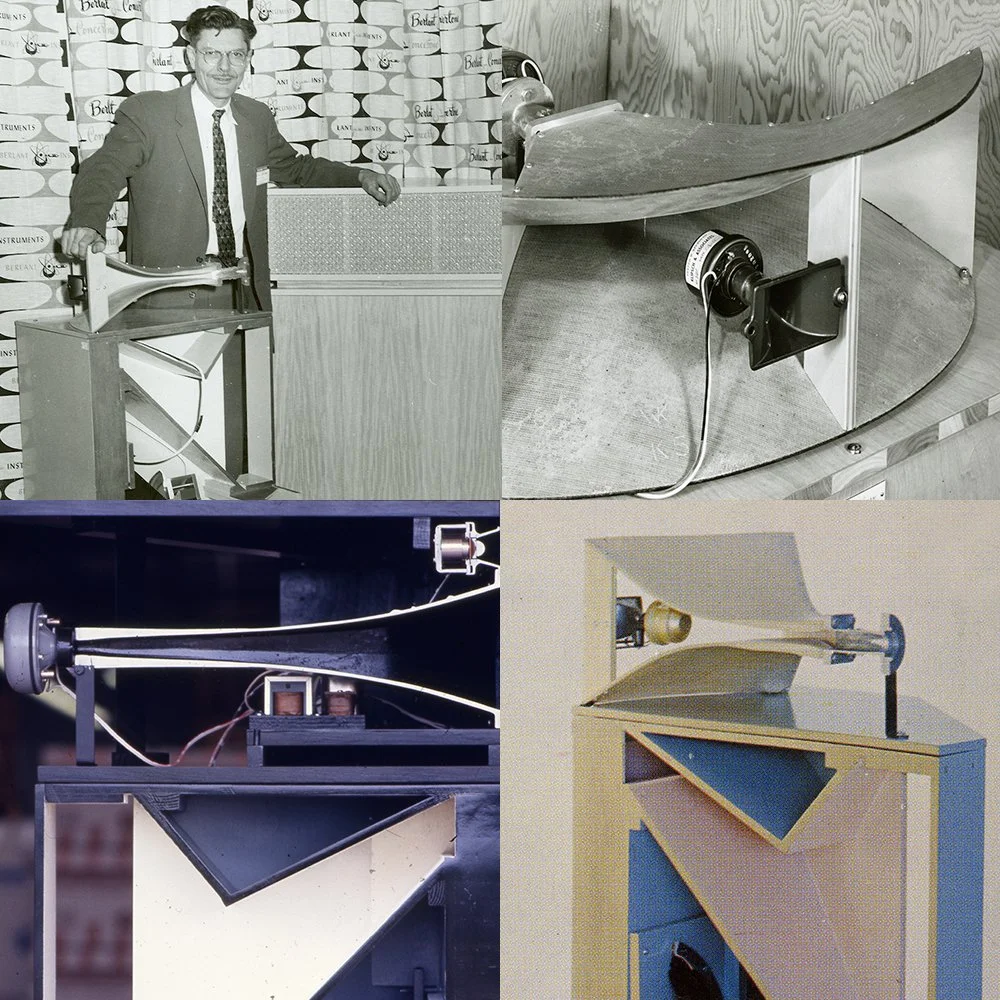
Back when it was first invented, a two-way (tweeter and woofer) Klipschorn with a frequency response up to 12Khz was generally adequate for the program material created up to that time. However, by the early 1950s, recording processes and playback technology had improved fidelity substantially, especially in high frequency detail, by using magnetic tape.
Due to the difficulty and expense of getting a mid-range driver to reach to the top end of the extended range now available with modern playback machines, the factory began converting Klipschorns to a three-way (tweeter, squawker, woofer) configuration in 1951.
The first three-way Klipschorn incorporated a Jensen RP203 tweeter. The University MID-T-4401 replaced the Jensen as the tweeter of choice later that year. It was not until mid-1952 that all units were finally converted to the three-way design still used today.
Read MoreSome stories become a legend. The connection between the phrase "Bullshit" and the legacy of Paul W. Klipsch is one of them.
Read MoreIn Paul’s words: "My first great love was railroads, but then in 1911 I saw Lincoln Beechy flying in and out of Purdue stadium and I fell in love with airplanes. I didn’t forsake my first love, I just became polygamous."
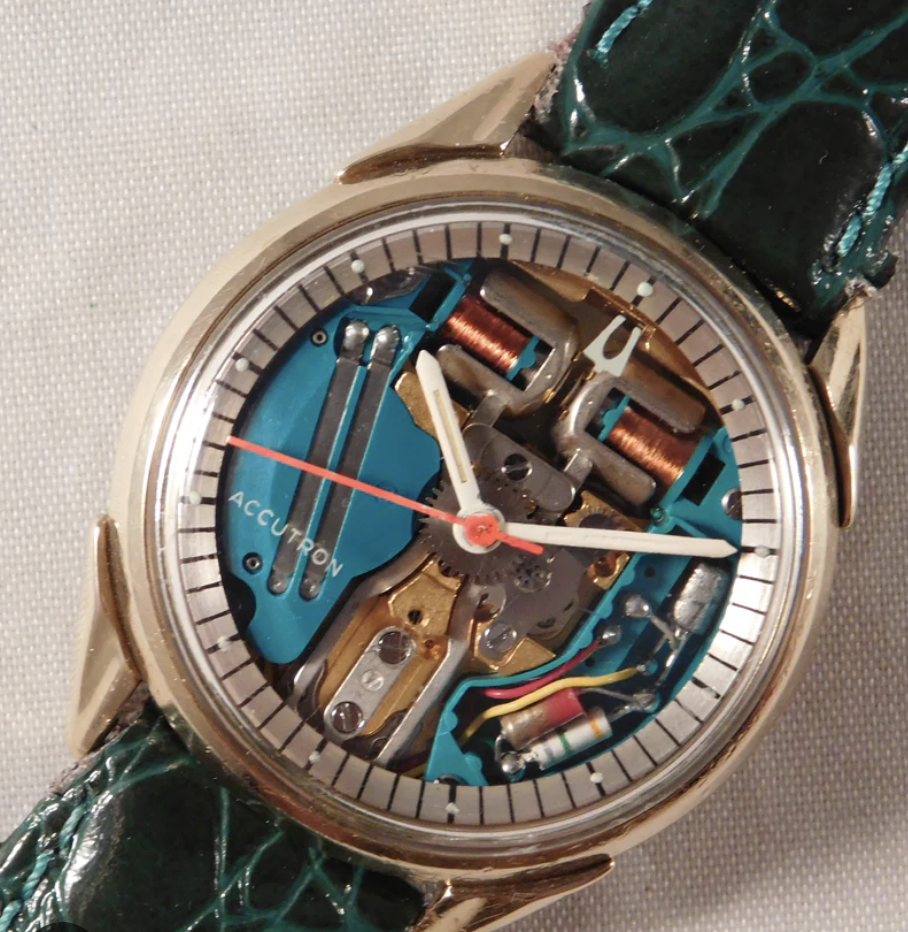
Read MoreIn late 1960 the Bulova Watch Company introduced the Accutron, a tuning-fork-based timepiece that was advertised as “the first instrument of the space age you can wear and use.” The tuning fork was powered by a transistor oscillator, becoming the first “electronic” watch.
Read MorePaul Klipsch has been considered by many to be the epitome of the “self-made man”. However, he would be quick to tell you that he “stood on the shoulders of giants”. Having friends in strategic places also greased the skids for Paul. While we do not have his earliest contacts with Sherman Fairchild, it is clear from over 200 pages of correspondence that this industry titan took many opportunities to help out “the little guy”. Never heard of Fairchild? Take a look at: https://en.wikipedia.org/wiki/Sherman_Fairchild.
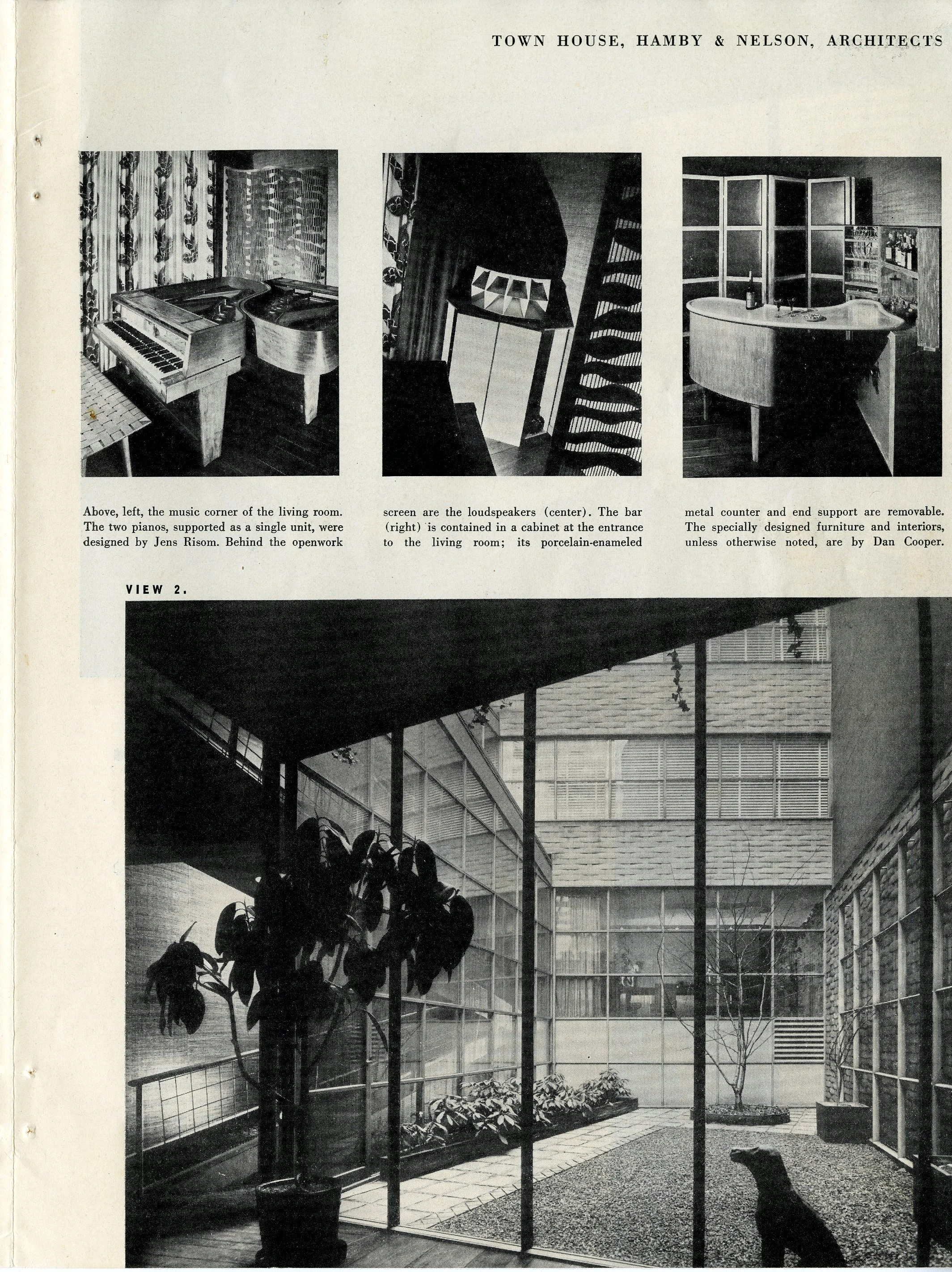
The earliest correspondence so far discovered is from May 1944. Paul wrote to Sherman about the lack of bass response from Sherman’s 1943 “Klipschorn” woofer. The woofer was built by Sherman’s carpenter from early drawings supplied by PWK, and it still utilized a 12” driver. The system was illustrated in The Architectural Forum of April 1943. This was before Paul’s own HF horn was designed, so a Western Electric multicell horn was utilized. Paul’s bass performance “diagnosis by letter” took quite a while, but eventually resulted in his visit to Sherman’s New York City penthouse, and the application of “about 2 pounds of putty” to stop some serious air-leaks. Earlier correspondence to Sherman from Altec Lansing’s John Hilliard https://en.wikipedia.org/wiki/John_Kenneth_Hilliard expressed Hilliard’s doubt in the performance of the yet-to-be named Klipschorn, as compared to larger cinema speakers. The putty removed those doubts!
Read MoreIn 1941 PWK was at the height of his 3rd career, oil prospecting. He worked in Houston, TX for Dr. E. E. Rosaire, initially at Independent Exploration, and then he followed Rosaire to Subterrex. It was his first job after receiving his graduate degree of Engineer at Stanford. Rosaire had a saying that PWK never forgot: “When any of you guys piss with your left hand, I want to get a patent on it!” In the seven years with Rosaire he received eight patents in electrical and acoustic methods of discovering oil.
Read MoreAbout ten years after the Summer of Love, tolerance for such nonsense remained rare in Arkansas. It was a sun shiny day when John Simmons entered the Post Office sporting his "disgusting afro" haircut. He would soon regret his less-than-chivalrous act of not holding the door open for a city police officer since the back of John's t-shirt featured a "cartoon voice balloon" with a single word - Bullshit. Such profanity was not tolerated back then, and because a Post Office is by definition on federal ground, the officer left the building and waited for John to re-enter his jurisdiction - the street. As soon as John exited federal land, the officer promptly drove his car from across the street, and said "Hold it there buddy!" John was arrested for disorderly conduct.
Read More©2026 Klipsch Heritage Museum Association | Terms and Conditions